RDM Marketing Business · 2025
RDM Marketing Business
Designing a conversion-first website for a Miami marketing agency
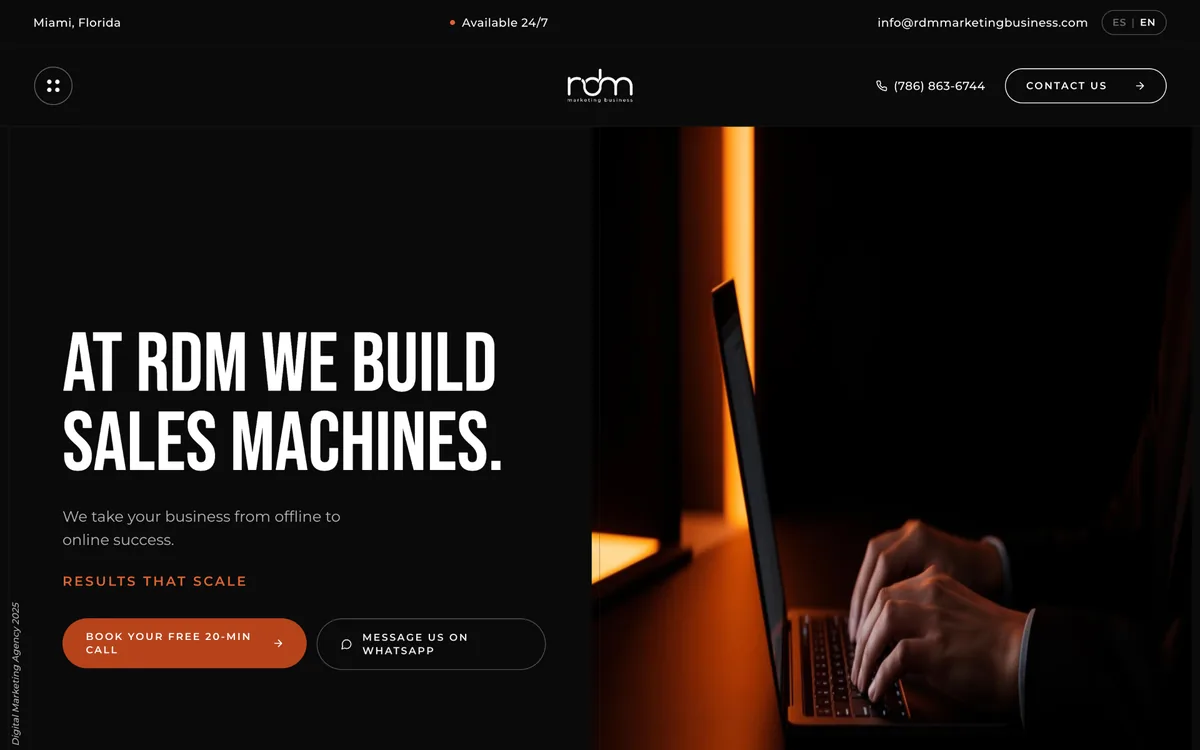
page, full funnel
sections designed
CTA conversion paths
from brief to delivery
Overview
The challenge was not just aesthetic, it was strategic. RDM Marketing Business is a Miami-based agency serving US-based SMBs with full-funnel growth systems. The founder needed a website that could generate qualified leads while positioning the agency as a premium, structured partner for an audience that is skeptical of marketing agencies after bad experiences.
The Core Design Question
"How do you convince an SMB owner who has been burned before to book a call with yet another marketing agency, using only a single webpage?"
Research: Competitor Benchmark
Before designing, I benchmarked 6+ marketing agency websites targeting similar audiences and identified the conversion patterns that appear consistently across top performers.
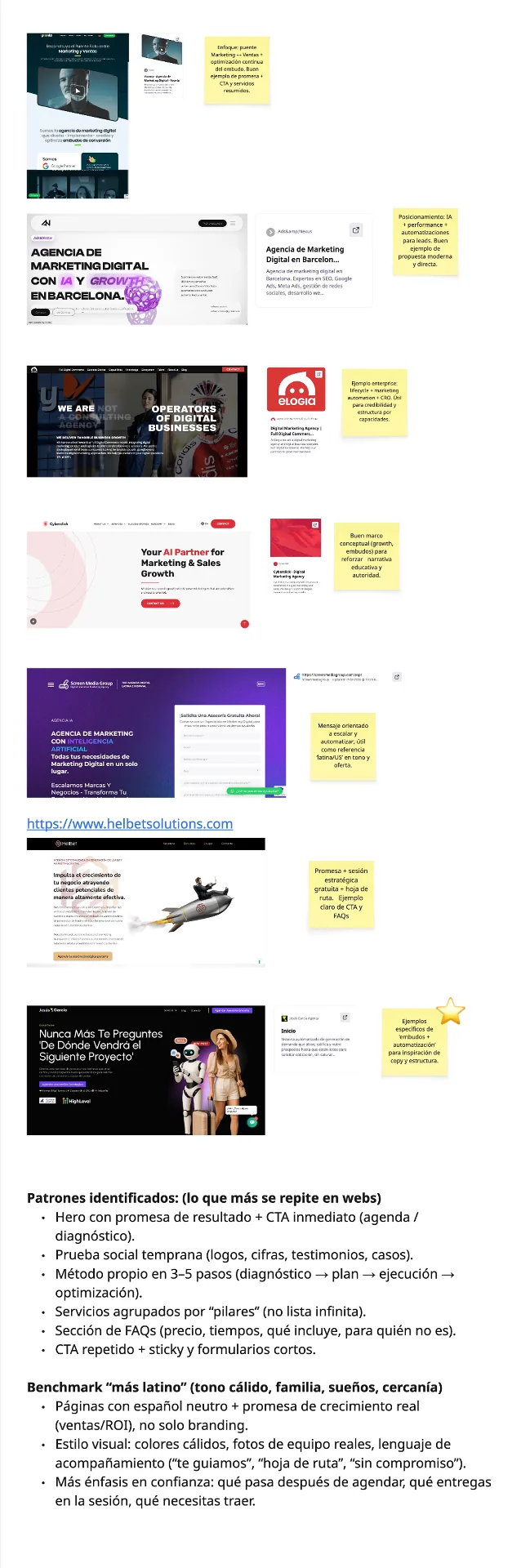
| Pattern Identified | Frequency | My Decision |
|---|---|---|
| Hero = promise of result + instant CTA | 6 of 6 sites | Adopted, results first, always |
| Early social proof (logos, numbers, cases) | 5 of 6 sites | Adopted, placed in Section 2 |
| Proprietary 3–5 step method | 5 of 6 sites | Adopted, became Método RDM |
| Services grouped by pillars, not a list | 4 of 6 sites | Adopted, Ecosistema 360° |
| Dual CTAs (formal + conversational) | 3 of 6 sites | Adopted, Calendly + WhatsApp |
| FAQ addressing objections by name | 4 of 6 sites | Adopted, bottom of page |
The Process
From Research to Structure
Based on the benchmark findings, I mapped the full page structure. Every section justified by a conversion goal, not by convention.

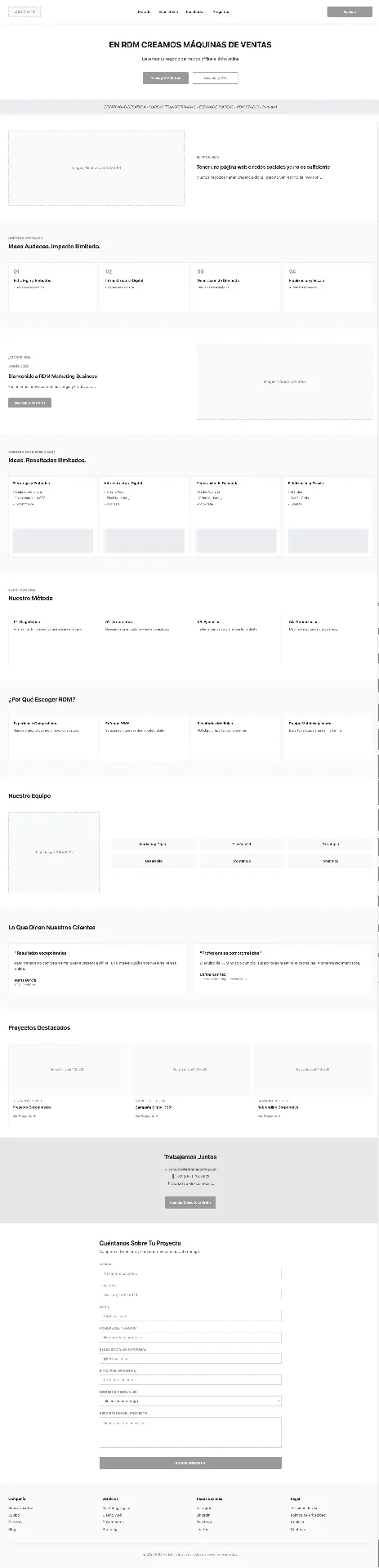
Wireframe evolution: from initial structure to refined layout
Strategic Architecture
I designed the IA around one central question: why would someone NOT book a call? Each section was built to eliminate a specific barrier: no results, no trust, no clarity, no urgency.
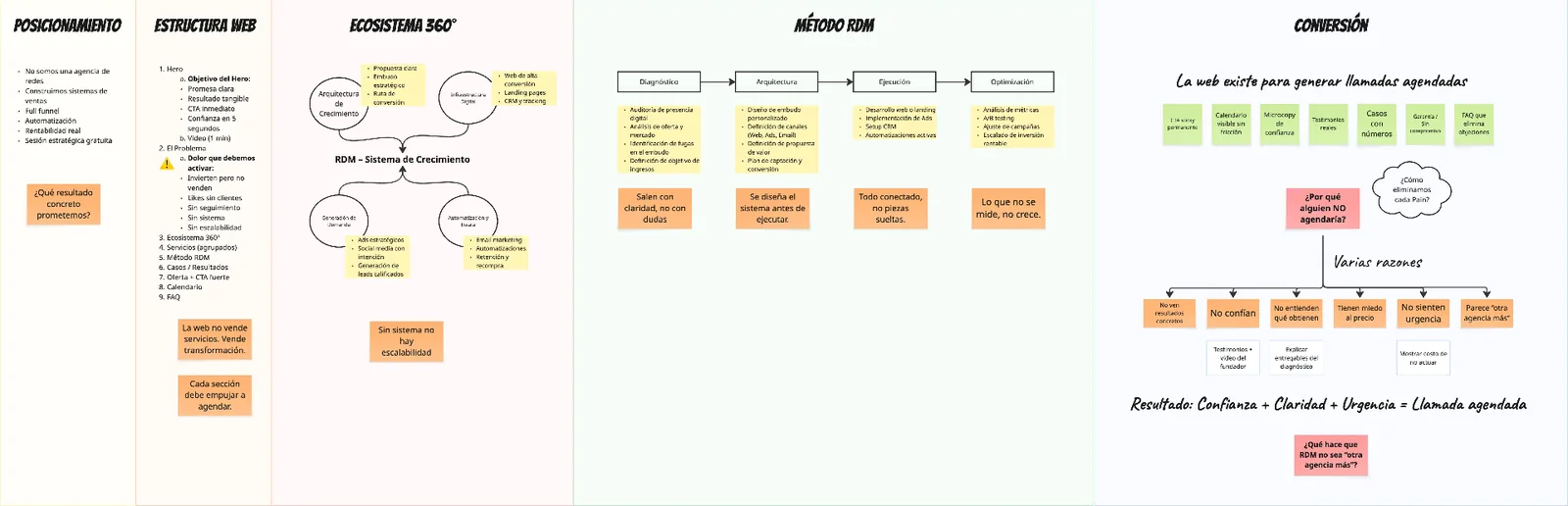
Strategic architecture: posicionamiento, estructura, ecosistema, método y conversión mapped in a single diagram
Key Design Decisions
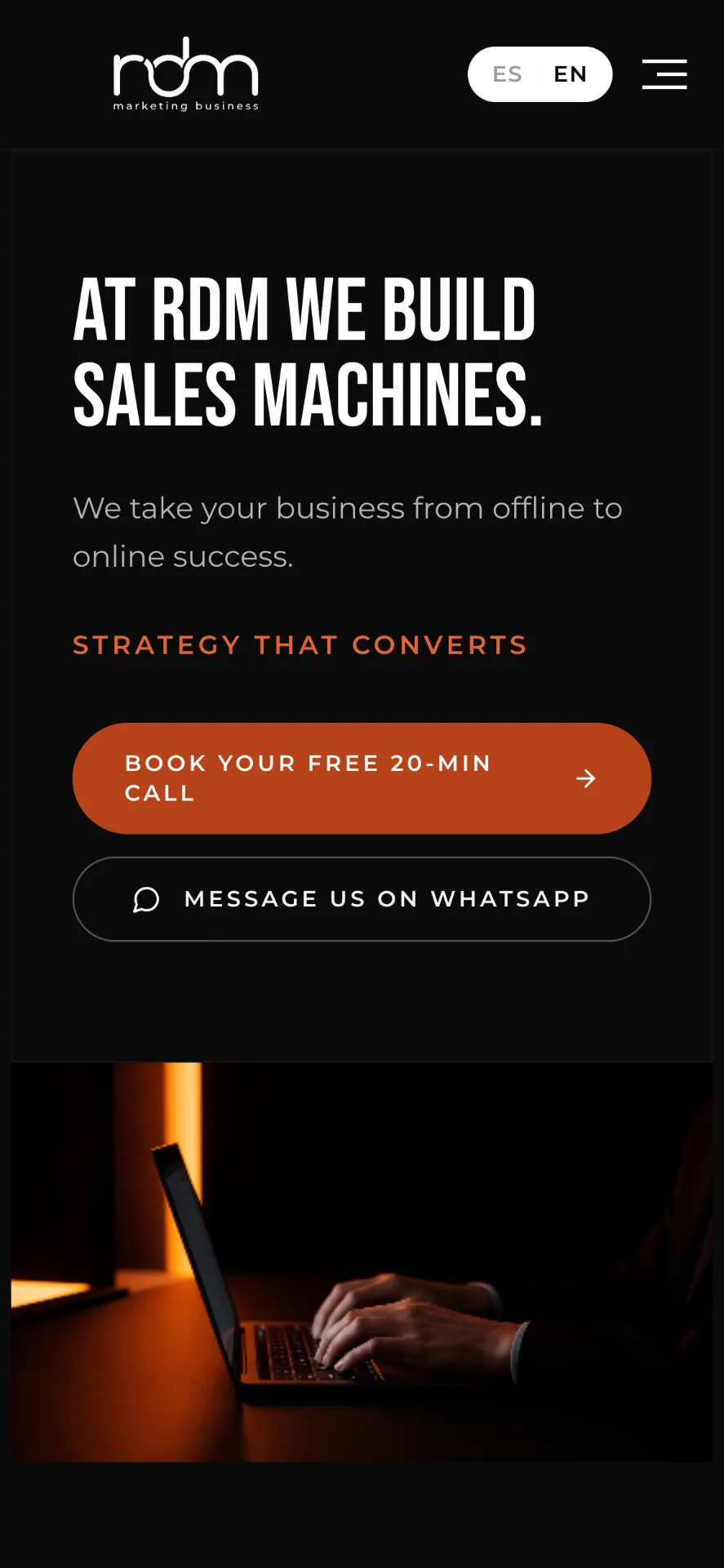
Dual CTA Architecture
Two conversion paths: Calendly for formal leads, WhatsApp for warm leads. For the US-Hispanic SMB market, WhatsApp is a trust signal, not just an alternative contact method.
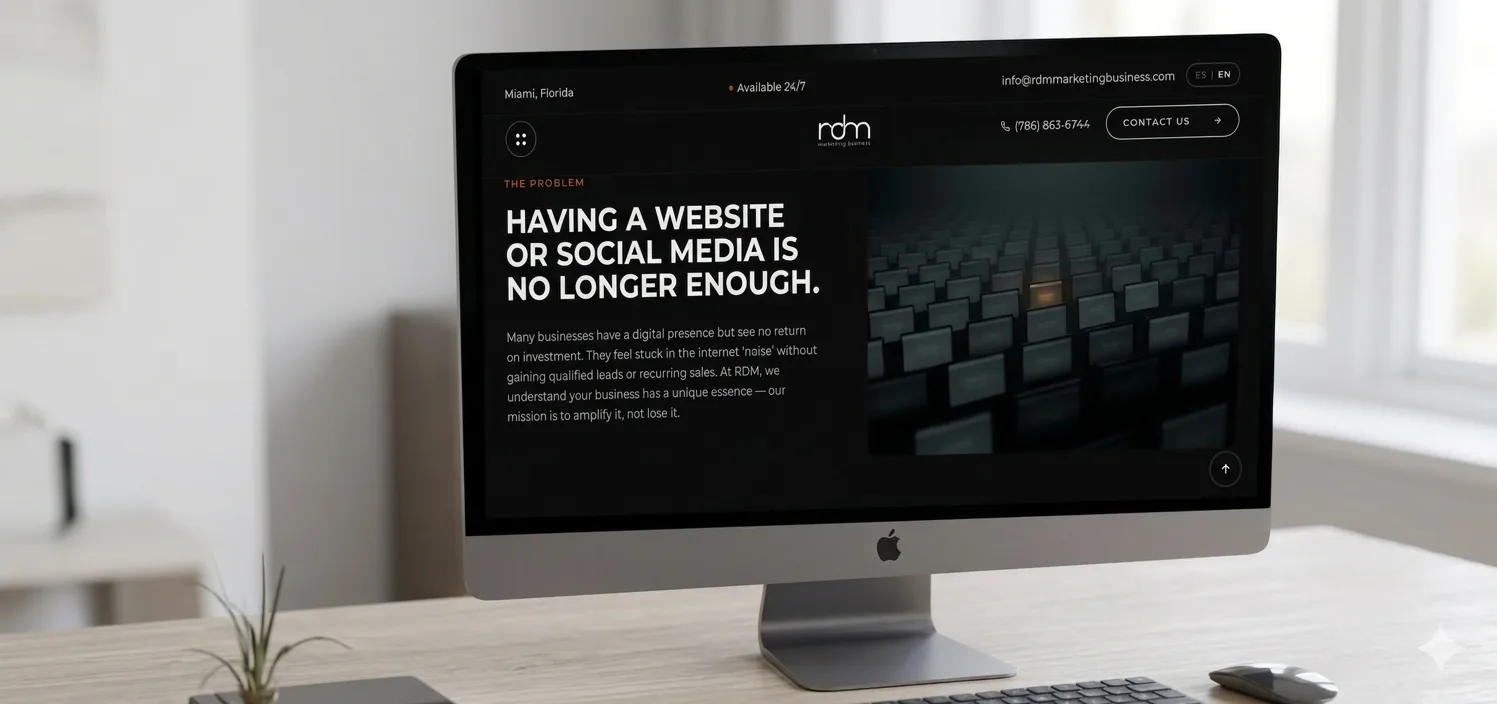
Problem-First Narrative
The page opens with "The Problem," acknowledging user frustration before presenting any solution. This mirrors the emotional journey of SMB owners who feel invisible online despite having a marketing budget.
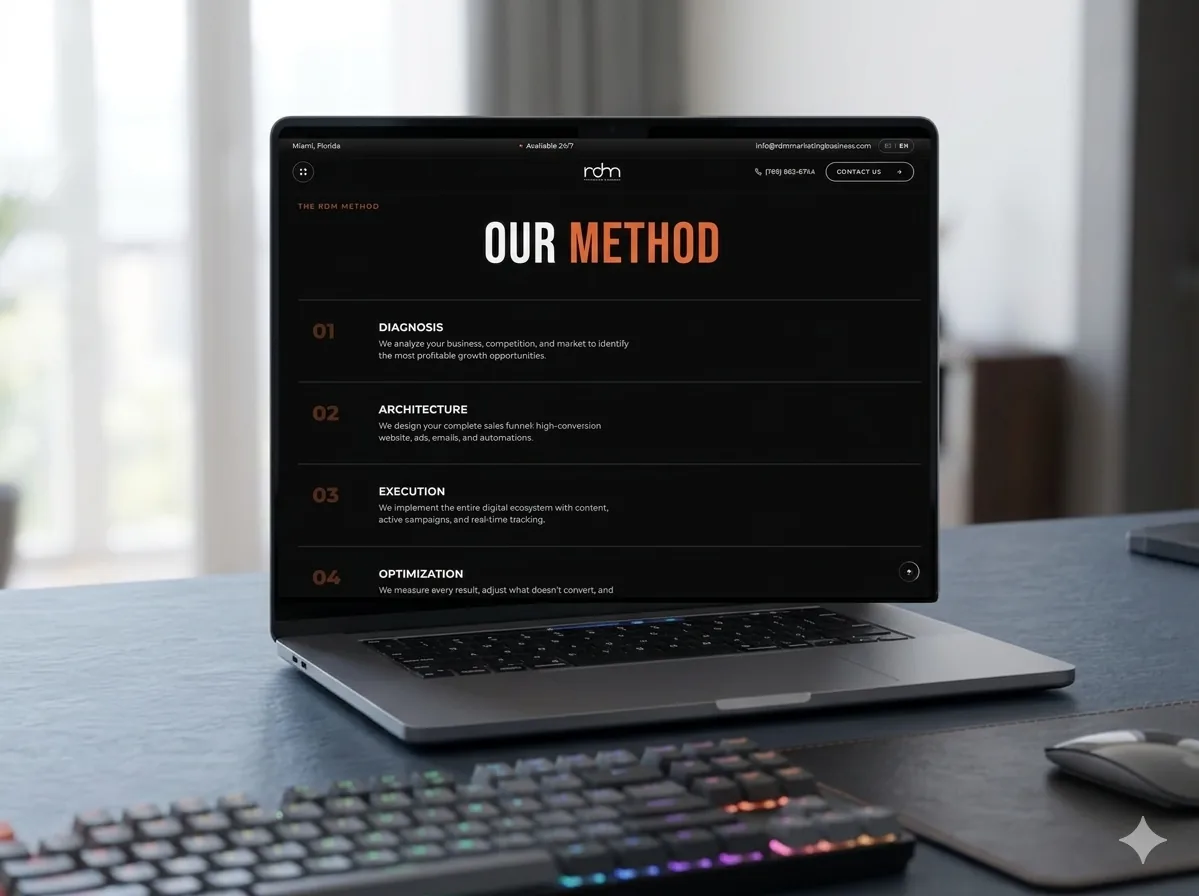
Process as Trust Signal
The 4-step Método RDM (Diagnosis → Architecture → Execution → Optimization) demystifies working together and reduces anxiety at the decision stage.
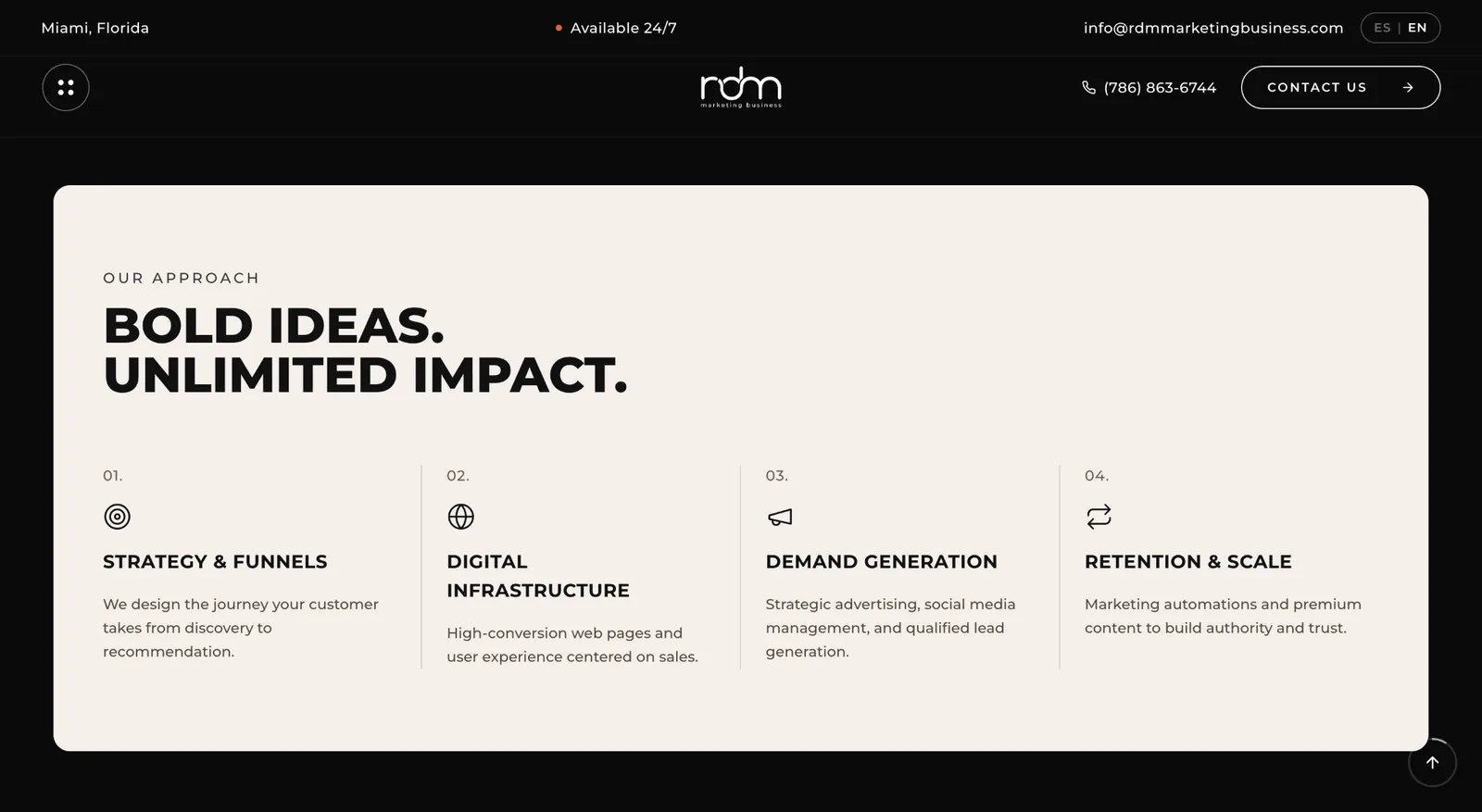
Services Grouped as a System
Services structured as 4 interconnected pillars rather than a list, signaling a strategic partner, not a vendor selling individual services.
Built for every screen
Responsive Design
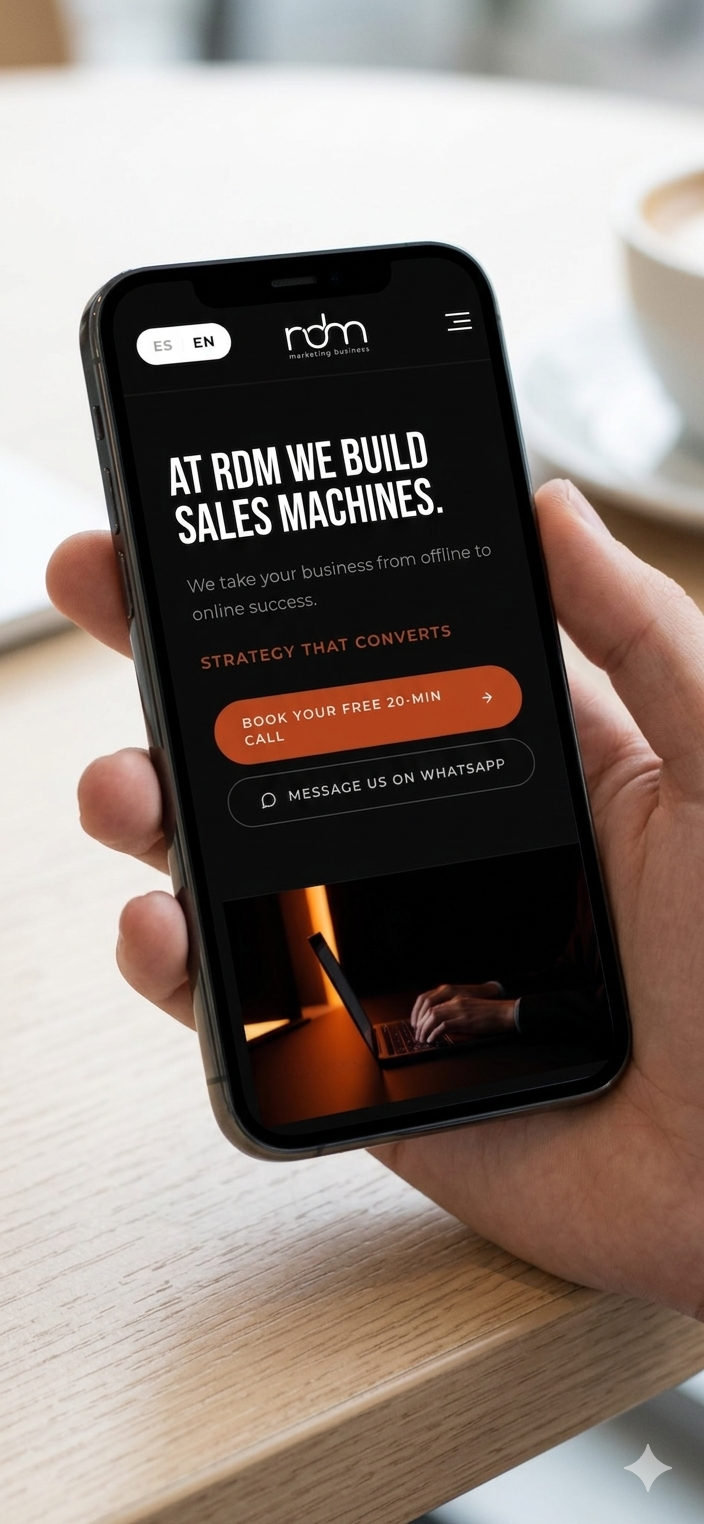
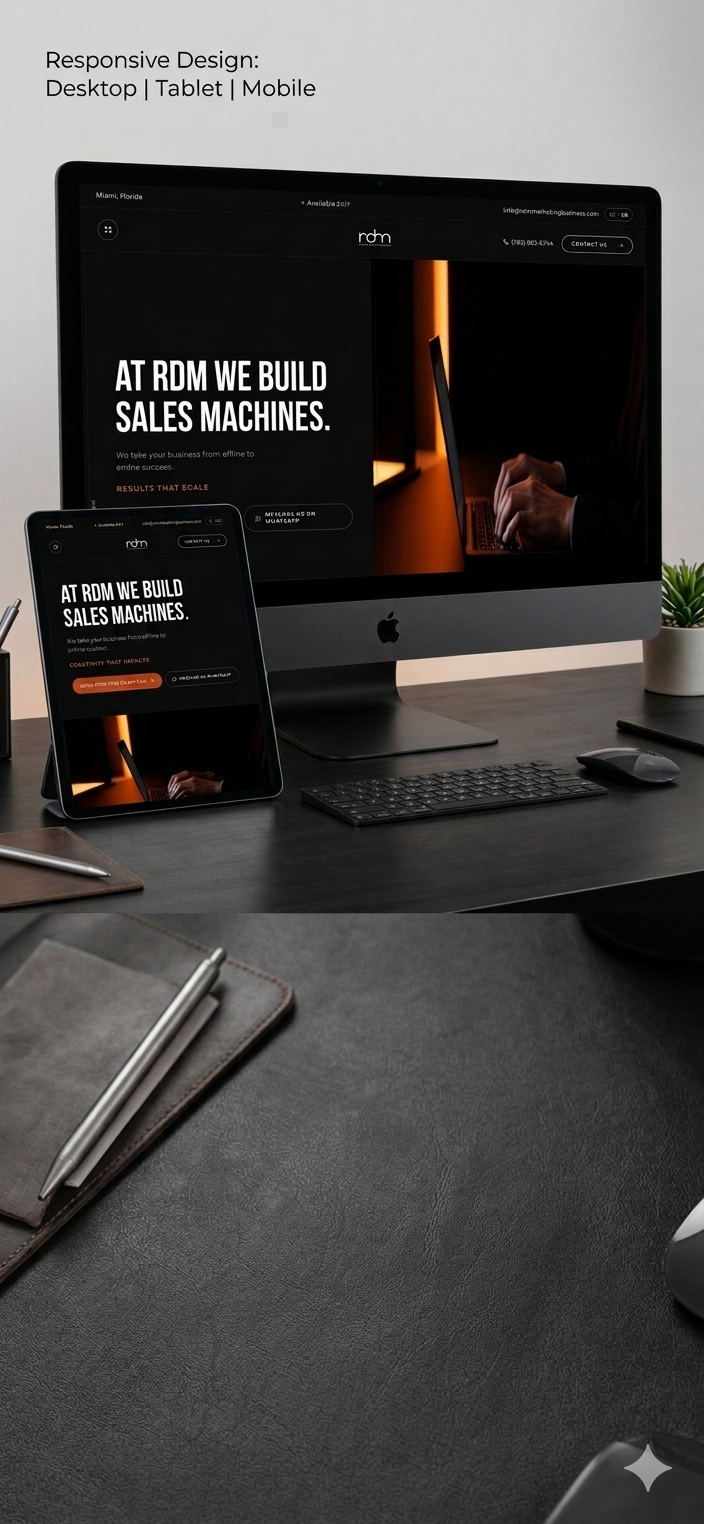
Designed and tested across desktop, tablet, and mobile. Critical for an SMB audience that browses primarily on mobile.
Built with AI · Lovable
The entire site was designed and built in Lovable, leveraging AI-assisted components to go from strategy to live website in 3 weeks without sacrificing conversion logic or design quality.
"AI-generated scaffolding accelerates layout and structure, but requires an experienced UX eye to catch conversion issues and validate dynamic elements before launch. Speed is the advantage; judgment is still the differentiator."
Results
Leads generated
Discovery calls booked
WhatsApp inquiries
Clients acquired from site
What I Learned
- •For conversion-focused pages, IA decisions have more impact than visual polish. What comes first, and why, is the highest-leverage design decision.
- •Competitor benchmarking reveals patterns that clients can't articulate but audiences expect. The dual CTA pattern emerged from research, not intuition.
- •Building with AI in Lovable shifts the designer's role from executor to strategic decision-maker. Time saved on build should be reinvested into sharper IA and conversion thinking.